

A guide to rating well: what makes a product opinion useful
How to give a taste verdict that helps others: try it calmly, be specific, talk about the product and choose well between SUPERLIKE, LIKE, MEH and NOPE.
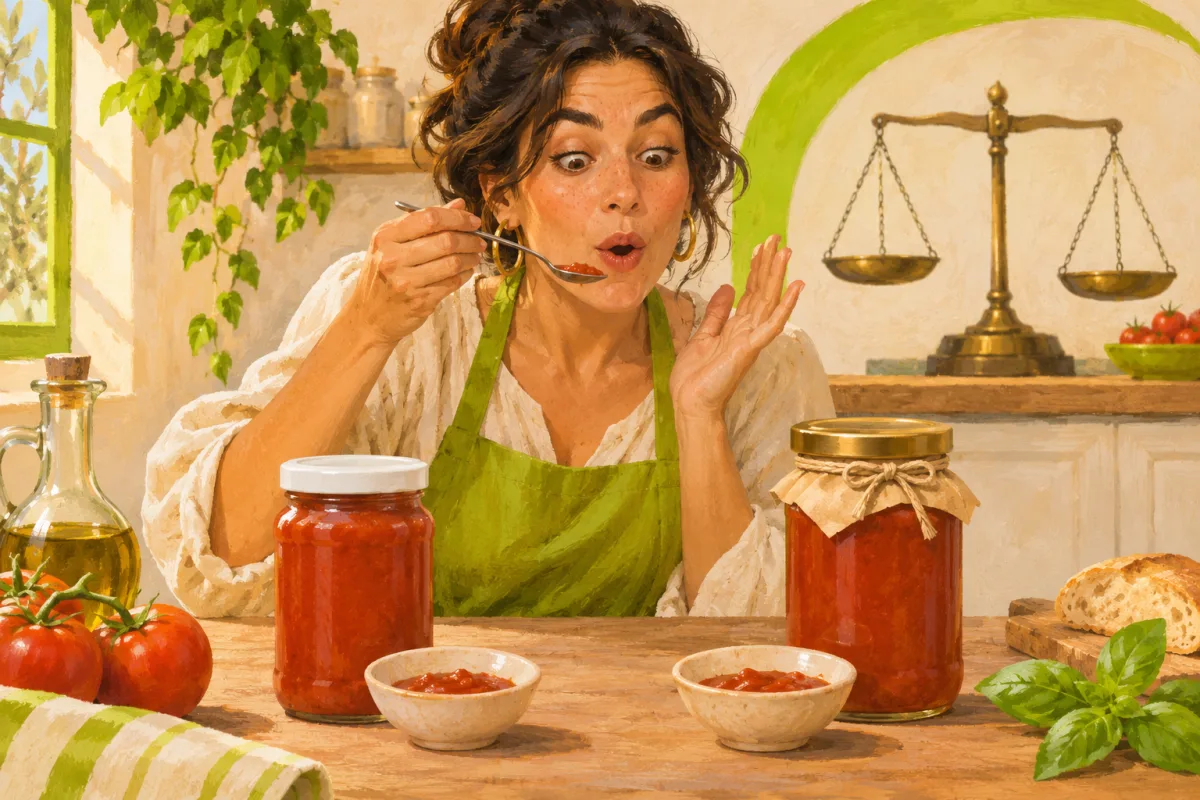
Paying more does not guarantee you will like something more. Why price and taste follow different paths, and how to decide with better criteria.
Short answer: a product's price reflects many things (ingredients, brand, marketing, distribution, the shop's margin, pack size) and taste is only one of them, and not always the main one. That is why an expensive product can disappoint and a cheap one can become your favourite. The only thing that really tells you how something tastes is trying it, or trusting what others have tried.
When you pay for a product you do not pay only for what is inside the pack. Among other things the price includes:
Some of those items influence taste and others do not. A heavily advertised brand does not have to taste better; a discreet brand that invests in ingredients may taste better without you knowing.
It is a very human mental shortcut: if it costs more, we expect more. That expectation shows when we taste. If you believe something is better, you tend to find it better, and the other way round. It is not a flaw in you, it happens to almost everyone.
A careful design, a name with an artisan feel or an elegant format create an impression before the first bite. That has a real effect on how we rate what follows.
Even if two products had exactly the same quality, you may prefer the sweeter one and someone else the saltier one. Price knows nothing about your preferences.
| Situation | What may be going on |
|---|---|
| Expensive product that disappoints | You pay for brand, size or distribution more than for taste |
| Cheap product you love | A simple recipe done well, with no marketing cost |
| Two similarly priced products with very different taste | Different supplier and different recipe |
| Price rise with no change in taste | Production costs, margins or promotions |
You do not need to do it all the time, but once, with a product you eat a lot, it is revealing.
Many people are surprised. And if you are not, good: you now know that in that category it pays to spend more.
Running that test on everything you buy is impossible. Other shoppers' taste reviews give you a quick hint about which products deserve a try. In SuperLikeIt every product carries people's verdict (SUPERLIKE, LIKE, MEH or NOPE), and you can see the one for each brand and each chain. If the best-liked products are not the most expensive ones, you will see it.
You can also note the price you see, with the shop and the date, to think afterwards whether the difference is worth it. For more on that, see how to compare prices across supermarkets and how to choose a store brand without regrets.
What we say is more modest: price is a useful data point, but it does not replace the opinion of someone who has tried the product.
Before choosing the expensive option, ask yourself what you expect to get from it. If it is a specific flavour you already know and like, paying for it makes sense. If it is an unchecked expectation, maybe you can try another option first.
No. Sometimes they do and sometimes they do not. The price includes costs that have nothing to do with taste.
It means trying products without knowing which is which. At home it is enough for someone to serve the products on identical plates and mark them underneath.
Because taste is personal. An average rating says what most people think, and you can be outside that majority without any problem.
It helps compare the cost of equivalent products, not to know whether you will like them. Those are two different questions.
As a hint, yes, especially when there are many and they agree. As absolute truth, no. That is why it is best to combine a review with your own test.
SuperLikeIt is free and has no ads. Scan the barcode, give your verdict and see what everyone else thinks.
Create my free accountHow to give a taste verdict that helps others: try it calmly, be specific, talk about the product and choose well between SUPERLIKE, LIKE, MEH and NOPE.

Open Food Facts is an open, collaborative food database. What it contains, how it is used, what its limits are and why it matters that it is open.

How each product's verdict is calculated, what we check and what we do not, how to report a review and what happens next. Transparent, with no small print.