

What is Open Food Facts and why an open database matters
Open Food Facts is an open, collaborative food database. What it contains, how it is used, what its limits are and why it matters that it is open.

How each product's verdict is calculated, what we check and what we do not, how to report a review and what happens next. Transparent, with no small print.
Short answer: each account gives one review per product, with four possible verdicts (SUPERLIKE, LIKE, MEH and NOPE). From them we calculate a score per product, per brand and per chain. We do not verify that you bought the product, and we say so openly. Anyone can report a review, and reports are reviewed by a person on the team.
It is your taste verdict on a specific product, identified by its barcode. It can carry an optional comment of up to 500 characters and some quick tags (sweet, salty, texture, value for money). For tips on doing them well, see the guide to rating well.
Each verdict is worth a number: SUPERLIKE 3, LIKE 2, MEH 1 and NOPE 0. But we do not use a simple average, for one reason: a product with a single SUPERLIKE vote would get a perfect 3 and top the ranking, and that is not fair to one with two hundred votes and a 2.8.
That is why we use a Bayesian average. Put simply: we start from a cautious initial score, equivalent to five votes worth 1.5, and from there each real vote moves it. With few votes the score stays near the starting point; with many, what people say takes over.
| Situation | Effect |
|---|---|
| One very high vote | The score rises a little |
| Many high votes | The score rises clearly |
| Split votes | The score sits in the middle |
With the reviews of all products from a brand or a chain we also calculate their combined result.
This is what matters most for transparency, so we say it plainly.
What we do:
What we do NOT do:
European rules on online reviews (the Omnibus Directive) ask for information on whether reviews are verified and how. We explain it on a page of its own (/legal/valoraciones).
Every review has a button to report it. Common reasons are:
When you report, the review goes into a moderation queue. It does not disappear instantly because of a report, to avoid it being used to silence uncomfortable opinions, but it is flagged for review.
You can also block a user so you do not see their reviews.
The content rules are in our terms of use. In short, we remove what is:
A negative taste review, without insults, is not a reason for removal. An unfavourable review is legitimate.
Product data (name, brand, photo) may come from Open Food Facts. If a code does not exist, anyone can create the product, and the new page stays pending review before it is visible. Our reviews and prices are not mixed into the Open Food Facts database.
Your reviews are tied to your account. You can view them, export your data and delete your account from the app. Privacy details are in our policy.
We are clear about the limits: an open review system is not perfect. There may be unhelpful reviews, opposing opinions or attempts at abuse. What we commit to doing is:
A person on the team reviews reports, following the content rules in our terms of use.
Because we have no simple way of doing it that respects your privacy. We prefer to say so clearly rather than pretend to a verification that does not exist.
No. The score comes only from people's reviews. At this stage of the app there is nothing that can be bought to change it.
Votes from test and internal accounts do not count in the public totals.
You can delete your account from the app, and your data is handled under our privacy policy. If you think a review should be removed, use the report button.
SuperLikeIt is free and has no ads. Scan the barcode, give your verdict and see what everyone else thinks.
Create my free accountOpen Food Facts is an open, collaborative food database. What it contains, how it is used, what its limits are and why it matters that it is open.

Advertising says what a brand wants you to know. Reviews say what happened when someone tried it. When to trust each one.
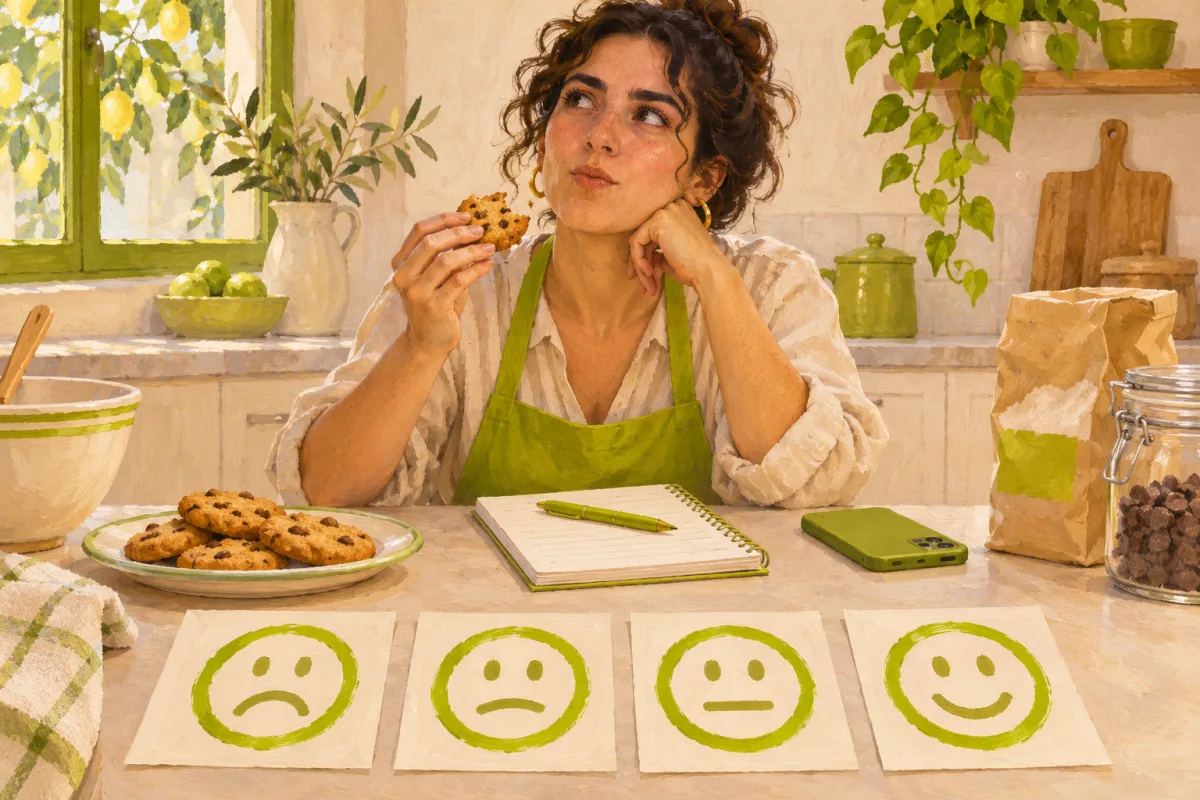
How to give a taste verdict that helps others: try it calmly, be specific, talk about the product and choose well between SUPERLIKE, LIKE, MEH and NOPE.